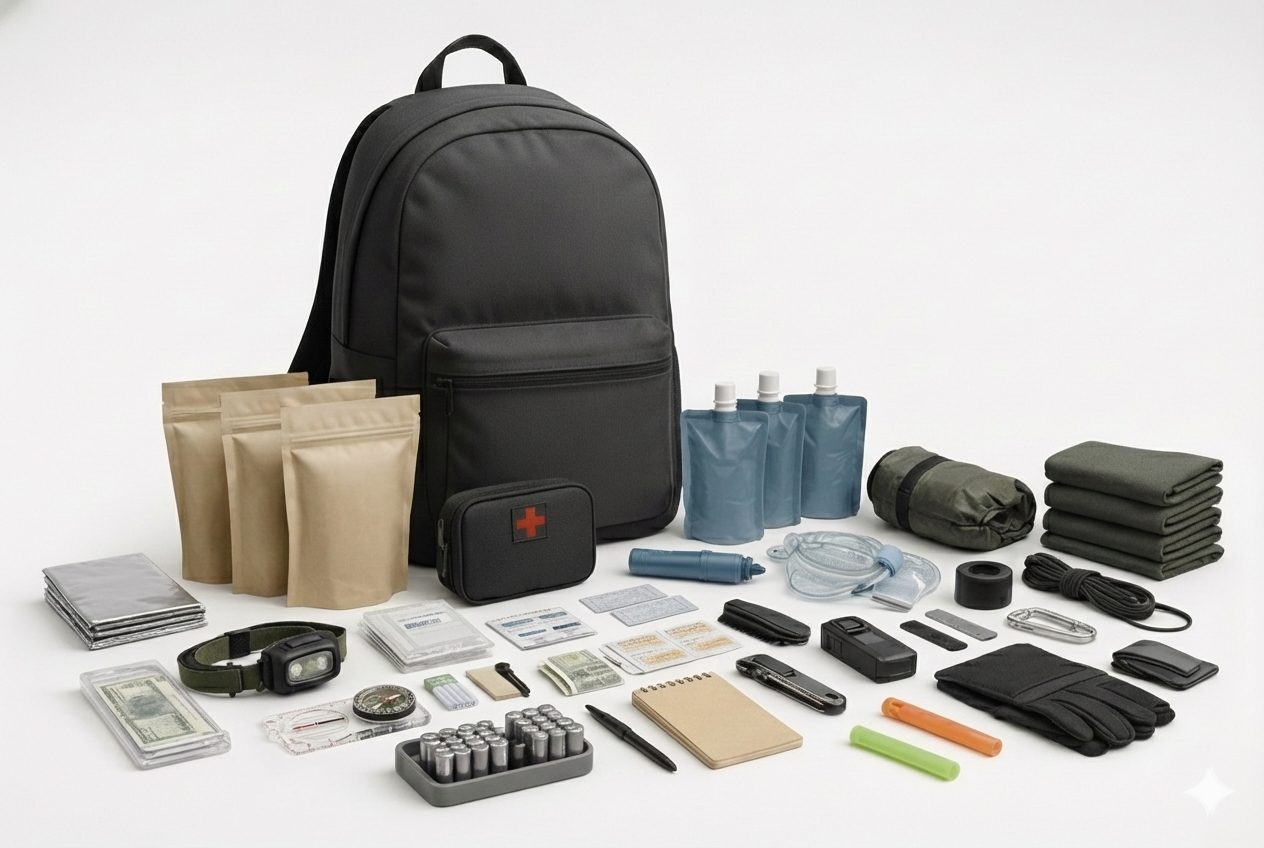
Rapid Departure - Bug Out Bag
Rapid Departure - Bug Out Bag
Stay Home If You Can. Have A Leaving Plan Anyway.
Leaving is a last resort. But if conditions force movement, your departure should not make you stand out.
This page is about practical relocation, not long-term wilderness survival or fantasy gear.
It is built for towns, suburbs, vehicles, hotels, shelters, waiting rooms, offices, public spaces, and family homes.
Leave calmly. Look ordinary. Stay functional.
The First Rule Of Bugging Out
The bag is not the plan. The destination is the plan.
A rapid-departure bag only helps you leave. It does not decide where you are going, who you are contacting, what route you are taking, or what happens if the first plan fails.
If you do not know where you are going, the bag only helps you move into the next problem.
The goal is simple: remove hesitation if leaving becomes necessary, stay low-profile, and carry enough to remain functional while moving or waiting.
When Leaving Makes Sense
Bugging out should only happen when staying home is clearly more dangerous than leaving.
Leave or prepare to leave for evacuation orders, fire, smoke threat, flooding, structural damage, violence nearby, a direct threat to the home, dangerous temperatures without safe heat, medical need that cannot be handled at home, or official guidance telling residents to relocate.
If your home is still safe, functional, and supplied, staying put is usually the stronger option.
Do not leave just because conditions are uncomfortable. Leave when staying becomes clearly unsafe.
What Most People Forget
Most bug-out bags focus on gear.
Most real-world departures fail because of paperwork, medication, poor planning, dead phones, empty fuel tanks, bad footwear, and not knowing where to go.
The destination matters more than the backpack. The plan matters more than the gear.
Decide your primary destination, backup destination, vehicle route, walking route, out-of-area contact, and regroup point before you need them.
The Bag
Your bag should look normal.
Choose a neutral colour such as black, grey, or navy. Use a real hip belt, simple internal organization, rain cover or liner, and a bag that is comfortable under load.
Target pack weight: 7–10 kg / 15–22 lb.
Heavy bags slow movement, create fatigue, and increase injury risk.
Do not make the bag look expensive, tactical, or overloaded.
Example low-profile backpack and bag options:
Note: Example items are shown for illustration purposes only. Equivalent products may also be suitable. Some links may be affiliate links and may support the site at no extra cost to you.
 |
 |
 |
 |
 |
 |
Test The Bag
Pack it fully and walk with it before you ever need it.
Walk several kilometres. Adjust the straps. Use the hip belt properly. Remove items that are not essential. Move heavy items closer to your back. Make sure nothing digs into your spine or shoulders.
A bag that looks good in a closet can feel completely different after 30 minutes of real walking.
Water And Hydration
This water layer is for movement and short-term displacement. It is not a replacement for your home water storage system.
Carry 1–2 L of filled water, emergency water pouches, a collapsible backup bottle, a compact personal water filter, optional purification tablets, and electrolyte packets.
Hydration keeps thinking clear.
Example water and hydration support:
 |
 |
 |
 |
 |
 |
Food
This is functional food for moving, waiting, driving, or sitting in temporary public spaces.
Carry 3–4 days of no-cook food: emergency ration bars, protein bars, jerky or nuts, peanut butter squeeze packs, energy chews, a compact utensil, and one small morale item.
No cooking. No smell. No mess.
You should not need a stove, kettle, or cleanup once you leave the house.
Example no-cook movement food:
 |
 |
 |
 |
 |
 |
Light And Phone Power
Think practical, not bright. You need enough light to move safely without advertising yourself.
Carry a headlamp, compact backup flashlight, spare batteries if required, a 10,000–20,000 mAh power bank, phone cable, and wall plug adapter.
A dead phone becomes a serious problem fast.
If you are moving through urban spaces, checking maps, contacting family, or receiving updates, power matters immediately.
Keep one cable that matches your current phone. Old cables sitting in a bag are useless if they no longer fit your device.
Example low-profile lighting:
 |
 |
 |
Example phone power and charging support:
 |
 |
 |
Warmth And Weather
You are preventing cold stress, not camping.
Moving is one thing. Waiting is another. A lot of evacuation time is spent standing still, sitting in vehicles, or waiting indoors where you can still get chilled.
Carry a warm hat, gloves, thermal base layer, at least two spare pairs of socks, rain shell or poncho, and emergency bivy or blanket.
Weather changes fast. Your bag should reflect that.
Example warmth, rain, and waiting support:
 |
 |
 |
 |
 |
 |
Medical And Mobility
This is not your full home medical system. This is the layer that keeps small problems from stopping movement.
Carry 3–7 days of prescriptions, basic first aid, blister care, pain and fever medication, antihistamine, anti-diarrheal, oral rehydration salts, nitrile gloves, and any critical daily medical items.
Foot care matters because most bug-out failures are not dramatic. They are friction, wet feet, hot spots, blisters, and small pain that gets worse with every step.
Mobility injuries end evacuations.
Feet decide whether the bag keeps moving. Break in footwear before you need it.
Example movement medical support:
 |
 |
 |
 |
 |
 |
Example foot care and friction control:
 |
 |
 |
Hygiene
This is about basic dignity, cleanliness, and staying functional if you are stuck in a vehicle, public shelter, hotel, office, or waiting area.
Carry unscented wet wipes, hand sanitizer, toothbrush, toothpaste, compact toilet paper, zip bags, and small garbage bags.
Clean people move more confidently in public spaces.
Keep hygiene low-odour, compact, and discreet.
Example hygiene support:
 |
 |
 |
 |
 |
 |
Identity And Friction Items
These are the items that make movement smoother and remove avoidable problems.
Carry ID, health card, small cash reserve, spare debit or credit card, printed emergency contacts, insurance information, small notebook, pen, address list, and local map if needed.
Keep copies sealed in a waterproof pouch.
Most delays are paperwork, identity, payment, directions, and small problems that become big when you are tired.
Include an out-of-area contact and a written destination plan. If phones fail or people separate, paper still works.
Example document, cash, notes, and navigation support:
 |
 |
 |
 |
 |
 |
 |
 |
 |
Vehicle Layer
If you may leave by vehicle, keep a separate vehicle kit. Do not overload the bug-out bag with items better stored in the vehicle.
Vehicle basics include fuel topped up when possible, booster cables or jump pack, tire inflator, blanket, phone charging cable, paper map, snow brush or scraper in winter, small tool kit, and extra water if temperature allows.
The bag stays mobile. The vehicle carries vehicle problems.
If you may need to abandon the vehicle, the bug-out bag should still work on foot.
Seasonal And Household-Specific Add-Ons
Check the bag at least four times per year. Ontario weather changes the bag.
Spring and summer may require lighter rain gear, sun protection, extra water capacity, and bug protection. Fall and winter may require warmer gloves, winter hat, thermal layer, extra socks, hand warmers, and better traction footwear.
A winter bag and a summer bag should not be identical.
Do not assume everyone in the household can carry the same load or has the same needs.
Add only what supports movement: pet leash, collapsible bowl, small pet food supply, child medication or comfort item, glasses, hearing-aid batteries, mobility aids, care instructions, and critical medical items that cannot be replaced easily.
Keep this realistic. Add what prevents failure, not everything that might be nice to have.
Urban Bug-Out Bag Checklist
- Bag: 40–45 L, neutral colour, real hip belt, rain cover or liner
- Destination: primary destination, backup destination, route, regroup point
- Water: 1–2 L filled bottle, backup pouches, collapsible bottle, electrolytes, LifeStraw-style filter
- Food: 3–4 days, no cooking, no smell, one small morale item
- Light: headlamp, backup flashlight, batteries if required
- Power: 10,000–20,000 mAh power bank, cables, wall plug
- Warmth: hat, gloves, base layer, 2 pairs of socks, shell, emergency bivy or blanket
- Medical: prescriptions, blister care, basic first aid, oral rehydration salts, gloves
- Hygiene: wipes, sanitizer, toothbrush, toothpaste, toilet paper, zip bags, small garbage bags
- ID: documents, cash, cards, printed contacts sealed waterproof
- Vehicle layer: separate vehicle kit if evacuation by vehicle is likely
- Maintenance: check quarterly, rotate meds and food, confirm cables still match your phone
Quick Summary
- The best plan is staying home. Have a leaving plan anyway.
- Leaving is a last resort, but it must be planned before conditions force the decision
- The destination matters more than the backpack
- The plan matters more than the gear
- Use a normal-looking backpack in a neutral colour
- Keep the target weight around 7–10 kg / 15–22 lb
- Carry water for movement, not long-term home water replacement
- Carry 3–4 days of no-cook food
- Keep phone power, documents, cash, and critical meds protected
- Prioritize foot care because small friction stops movement
- Keep hygiene compact, low-odour, and discreet
- Keep vehicle gear in the vehicle, not in the backpack
- Swap seasonal items four times per year
- Test the bag by actually walking with it
The purpose of this bag is not to live out of it forever.
It is to get you out quickly, keep you functional, and buy time while everything is still unsettled.
Pack once. Test it. Maintain it quarterly. If movement becomes necessary, leave without hesitation, confusion, or delay.