Sanitation & Hygiene
Sanitation & Hygiene
Waste Does Not Stop Because The Plumbing Does.
Most people never think about sanitation until the toilet stops working.
They assume the toilet will flush, the water will run, and the sewer system will keep working.
But if plumbing stops, the problem starts immediately. Waste still has to go somewhere. Hands still need to be cleaned. People still need to stay healthy.
A sanitation plan is not about comfort. It is about keeping the home livable.
The Goal
The goal is simple: keep waste contained, keep hands clean, reduce illness risk, and keep the home livable.
Sanitation is one of the systems that prevents a household from breaking down during a prolonged disruption.
Use. Tie. Separate. Clean.
That is the basic routine. Use the system, tie waste immediately, separate solids and urine where practical, and clean hands every time.
The First Decision
You have two choices.
Use water. Or stop using water.
Most people waste enormous amounts of water trying to keep normal toilets working. A better long-term approach is usually to separate sanitation from plumbing entirely.
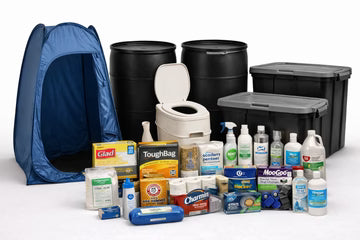
That means a dedicated emergency toilet, waste bags, urine separation where practical, hand hygiene supplies, cleaning supplies, odour control, and sealed storage.
The less water you use for sanitation, the more water remains for drinking, cooking, and medical needs.
Emergency Toilet Options
If plumbing becomes unreliable, the simplest solution is a dedicated emergency toilet system.
The goal is not comfort. The goal is predictable waste containment that keeps the home functioning.
If the bathroom is warm, accessible, and safe to enter, you may be able to use the existing toilet with liners.
If the bathroom is too cold, too far from the warm core, or causing heat loss, sanitation should move into the heated living space with a controlled setup.
Example bathroom and toilet-support supplies:
Note: Items shown are examples only, not specific recommendations. Some links may be affiliate links and may support the site at no extra cost to you.
 |
 |
 |
 |
 |
 |
Warm-Core Toilet Setup
If the bathroom is cold, too far away, or causing heat loss, sanitation may need to move into the warm core.
The setup should be simple, contained, private, and repeatable.
Use a 5-gallon bucket with toilet seat lid or portable dry toilet, heavy-duty contractor bags, absorbent material, a lid, gloves, wipes, and a privacy barrier.
Waste does not sit open in living space. Use it, tie it, and move it to sealed storage.
Example warm-core toilet and privacy setup:
 |
 |
 |
 |
 |
 |
Waste Containment
Solids are the contamination problem. Urine is the volume problem.
For longer disruptions, separate them where possible. Mixing urine and solids increases volume, odour, handling difficulty, and contamination risk.
The goal is not to make sanitation pleasant. The goal is to make it predictable.
For solid waste, use heavy-duty bags, tie immediately, and move to sealed storage. For urine, use a sealed jug, dedicated container, or urine drum.
Planning shortcut: assume about 1 sealed solid-waste bag per person per day, plus margin.
For urine, assume about 1.5 litres per person per day, plus margin.
90-day solid-waste bag estimate with 25% margin: 1 person: about 113 bags. 2 people: about 225 bags. 4 people: about 450 bags. 6 people: about 675 bags.
90-day urine estimate with 25% margin: 1 person: about 169 L. 2 people: about 338 L. 4 people: about 675 L. 6 people: about 1,013 L.
Reality check: sanitation adds up fast. Three months of sanitation is not a bucket and one roll of bags. It is a controlled waste system.
Example waste drums, liners, bags, and absorbent support:
 |
 |
 |
 |
 |
 |
Odour Control And Chemical Safety
Odour control matters, especially during long-duration indoor living.
Keeping urine separate from solid waste dramatically reduces odour, reduces waste volume, and makes the sanitation system easier to manage.
Best practice: keep solids and urine separate whenever possible.
Commercial portable-toilet deodorizers can help control odour and are often easier for homeowners to manage than creating their own chemical mixtures.
Follow product directions carefully. Do not mix bleach, ammonia-based cleaners, lime, portable-toilet chemicals, disinfectants, or other sanitation products together unless the product specifically instructs you to do so.
Never mix sanitation chemicals together unless the label specifically says they can be mixed.
The goal is simple:
- control odour
- keep waste contained
- reduce bacterial growth
- avoid unnecessary chemical exposure
- keep the home livable
A well-managed sanitation system should remain sealed, organized, and predictable.
Hand Hygiene Is Non-Negotiable
Waste containment prevents problems. Hand hygiene prevents them from spreading.
Hands are the control point. If hands are not cleaned properly, sanitation failure spreads through the rest of the home fast.
Set up a simple handwashing station with a clean-water container, spigot, catch basin, soap, paper towels, sanitizer, gloves, and covered trash.
Hands must be cleaned immediately after every sanitation interaction.
If drains are working, greywater can go down the sink in small amounts. If drains slow, back up, or stop flowing freely, switch to a separate greywater container. Never mix greywater with urine or solid waste.
Example hand hygiene and paper supplies:
 |
 |
 |
 |
 |
 |
Personal Hygiene Without Plumbing
Personal hygiene is not cosmetic during a long disruption. It helps reduce skin problems, foot problems, odour, infection risk, and morale collapse.
Plan for wipes, no-rinse body wash, dry shampoo, microfiber cloths, a small wash basin, extra underwear, and extra socks.
Wipe down daily: face, underarms, groin, and feet. Change underwear daily. Rotate socks often. Keep feet dry.
Morale improves dramatically when people feel clean.
Example personal hygiene supplies:
 |
 |
 |
Low-Water Washing
If water must be conserved, use a small-basin wash method instead of trying to recreate normal bathing.
Use 1–2 litres of warm water, a small amount of soap, a microfiber cloth, and a towel. Wash in sections, not all at once.
This keeps water use low, moisture controlled, and hygiene manageable.
Example low-water washing support:
 |
 |
 |
Laundry Discipline
Do not treat laundry like normal life. Wash what matters most and keep the moisture load low.
Prioritize underwear, socks, base layers, and cloths used for hygiene.
Use compact detergent, a small-bucket washing method, and an indoor drying line away from the warm core if moisture becomes a problem.
Avoid drying large loads in the warm core. Too much moisture increases condensation and mold risk in winter.
Cleaning & Surface Control
Sanitation only works if the waste area, handwashing area, and nearby surfaces are controlled.
Keep disinfecting spray, gloves, wipeable surfaces, dedicated sanitation cloths, covered trash, and a sanitation tote together.
Keep the sanitation zone away from food prep. Use the same steps every time. Routine prevents mistakes.
Example surface control and cleanup supplies:
 |
 |
 |
Household-Specific Needs
These are not extras. For some households, they are core parts of the sanitation plan.
Count menstrual supplies, diapers, baby wipes, incontinence products, ostomy supplies, wound-care supplies, sick-person supplies, and pet waste needs before the emergency.
If someone in the home depends on these items, they are not optional.
The Reality Most People Never Consider
Most people have stored some food. Some have stored water. Almost nobody has planned for what happens after weeks of eating, drinking, cooking, and living inside the same home.
Sanitation becomes a system. Not because it is exciting. Because it is unavoidable.
Waste does not stop because the plumbing does.
For two people, a serious long-duration sanitation system can require hundreds of waste bags, hundreds of litres of urine storage, hundreds of gloves, months of toilet paper, months of soap, and months of wipes.
The goal is not to memorize every number. The goal is to understand the scale.
Sanitation System Check
A sanitation plan only works if the pieces are stored together and ready before the disruption.
Check bags, gloves, wipes, sanitizer, toilet paper, soap, disinfecting supplies, buckets, lids, toilet seat, privacy setup, drums, drum liners, and urine containers.
Review household needs regularly: pets, babies, seniors, medical supplies, menstrual supplies, incontinence needs, and sick-person supplies.
Do not wait until the toilet stops working to find out the bags are too thin, the drum has no liner, or the handwashing station was never assembled.
Quick Summary
- Waste does not stop because the plumbing does
- Use the existing bathroom if it is warm, safe, and practical
- Move sanitation into the warm core if the bathroom causes heat loss or unsafe movement
- Seal waste immediately
- Separate solids and urine where practical
- Plan around 1 solid-waste bag per person per day plus margin
- Plan around 1.5 litres of urine per person per day plus margin
- Use sealed drums or containers for longer-duration waste storage
- Never mix sanitation chemicals unless the product label specifically says they can be mixed
- Use handwashing, not sanitizer alone, as the main hygiene system
- Stock gloves, wipes, soap, paper towels, and greywater containers
- Use low-water body hygiene to reduce odour, illness risk, and morale problems
- Count household-specific needs before the emergency
- Store the system together and check it before winter
Sanitation is discipline.
Use. Tie. Separate. Clean.