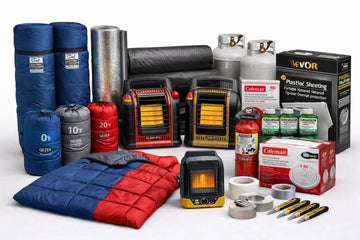
Heat & Warmth
Heat & Warmth
Heat One Room. Keep The Household Inside.
In a winter outage, cold drives bad decisions.
A real heat plan is not about keeping the entire house comfortable. It is about keeping one controlled room livable.
When power and furnace heat fail, the goal is simple: concentrate heat, conserve fuel, reduce drafts, and keep people warm enough to stay put.
One heated room. Safe indoor-rated heat. Disciplined fuel use.
The First Rule Of Emergency Heat
The goal is not to heat the whole house.
The goal is to keep one controlled room livable long enough for the household to remain stable.
This system exists for one reason: to provide safe, room-based emergency warmth when normal heat is no longer available.
If the room is too cold to sleep, think clearly, or function safely, the heat plan is not doing its job.
How This Heat System Works
This system is built around a single warm-core room, safe indoor-rated heat, and disciplined fuel use.
Choose The Warm Core
Pick one small, controllable room where the household can sleep, sit, communicate, and stay warm.
Heat Safely
Use only an indoor-rated non-electric heater with proper alarms, spacing, ventilation, and fire safety gear.
Keep Heat In
Seal drafts, insulate windows, layer floors, use proper bedding, and avoid burning fuel to heat unused space.
Rule: heat the people and the warm core — not the whole house.
You Are Not Heating The Whole House
Trying to heat an entire home during a winter outage is usually unrealistic.
Fuel disappears fast. Portable heaters cannot overcome whole-house heat loss. The larger the heated space, the faster the plan burns through fuel.
This system assumes one primary heated room, closed doors, sealed drafts, insulated windows, layered floors, and the rest of the home allowed to go cold.
You are not trying to keep the house comfortable. You are trying to keep one room livable.
The Warm Core Strategy
The warm core is the one room where daily life happens during a winter outage.
Good warm-core choices include a main living room, a basement room with fewer exterior walls, a room with fewer windows, or any room that can be closed off from the rest of the house.
The warm core should become the centre of daily life: heating, sleeping, lighting, communications, medical supplies, basic food prep, and daily activities should all be concentrated in the same space.
Cold rooms become storage, not living space.
Best warm-core target: choose the smallest room that can realistically hold the household, bedding, basic supplies, and safe heater clearance.
A smaller room is easier to heat, easier to darken, easier to monitor, and easier to protect from cold air loss.
Primary Heater Strategy
Primary emergency heater: an indoor-rated catalytic or radiant propane heater sized for a single room.
Look for an oxygen depletion sensor, tip-over or shutoff protection where applicable, adjustable output, silent operation, and no electrical dependency.
This is not a whole-house system. It is controlled, room-based survival heat.
Use only indoor-rated heaters according to the manufacturer’s instructions. Outdoor-only heaters and camp stoves are not room heaters.
Example indoor-rated heat options:
Note: Items shown are examples only, not specific recommendations. Some links may be affiliate links and may support the site at no extra cost to you.
 |
 |
 |
Heater base matters. Place the heater on a stable, non-combustible surface such as tile, cement board, or a metal tray sized appropriately for the unit.
Mandatory Indoor Safety Equipment
If you use combustion heat indoors, safety gear is not optional.
You need a battery-operated carbon monoxide detector, battery-operated smoke detector, ABC-rated fire extinguisher, fire blanket, controlled fresh air intake, proper heater clearance, and spare batteries.
If a carbon monoxide alarm or smoke alarm triggers, shut the heater down immediately and increase ventilation.
Follow the heater manual and alarm instructions for placement, spacing, and operation.
Example alarm and fire-safety essentials:
 |
 |
 |
 |
 |
 |
Ignition is a dependency. Keep a lighter and backup matches with the heater setup, not somewhere else in the house.
Heat-resistant gloves are worth having for handling hot equipment, cookware, and fuel-related tasks safely.
Fuel Storage Strategy
Fuel handling is where a heat plan either becomes disciplined or dangerous.
Under normal conditions, store 20-lb propane tanks outside the home. Keep tanks upright, valves closed, away from ignition sources, protected from damage, and stored in a cool, ventilated outdoor area where appropriate.
Bulk propane is never stored inside living space. Do not store propane in the basement.
Propane is heavier than air. If it leaks, it sinks and collects at the lowest point.
If the garage is used as a staging area during an event, keep tanks upright, valves closed, away from sparks, tools, and ignition sources. Keep access clear and storage controlled.
Do not bring 20-lb tanks into the house.
Small Cylinders In The Warm Core
During an emergency, controlled indoor use may be necessary if that is how your indoor-rated heater is designed to operate.
Bring in only the small cylinder actively being used. Keep it upright, away from bedding and flammable materials, and do not stockpile extra cylinders in the heated room.
You are not storing fuel in the room. You are using fuel in a controlled way.
Refillable Vs. Standard 1-lb Cylinders
If you plan to rely on small propane cylinders, proper refillable cylinders are the better option. They are built for repeated use and designed for controlled refilling with the proper system.
Use cylinders specifically designed to be refilled. Standard disposable 1-lb cylinders are not the preferred long-term plan.
Refill approved refillable cylinders only. Follow the refill system instructions exactly. Refill outdoors, inspect fittings and seals, and check for leaks using solution.
Fuel discipline matters: organized fuel handling reduces wasted movement, reduces mistakes, and keeps the heat system under control.
Example propane storage and refill support:
 |
 |
 |
Garage Security Matters Too
If the garage becomes part of your heat and fuel system during an event, treat it that way.
Many people do not realize an electric garage door has an emergency release that can sometimes be triggered from outside.
Lock the door between the house and garage. Secure the garage door so it cannot be opened easily from outside. Keep fuel organized and controlled. Keep access clear.
The garage is not living space, but during an event it can become your access point for fuel and a security weak point if you ignore it.
Fuel Planning Reality
Fuel is the limiting factor in a long winter outage. The colder it is, the leakier the room is, and the longer the heater runs, the faster the plan burns down.
Heavy winter planning example: a 9,000 BTU heater running 16 hours per day uses about 144,000 BTU per day.
A typical 20-lb propane cylinder contains roughly 430,000+ BTU, which works out to about 3 days per tank at that usage level.
Practical tank planning estimate:
- 30 days: about 10 tanks, or about 13 tanks with 25% margin
- 60 days: about 20 tanks, or about 25 tanks with 25% margin
- 90 days: about 30 tanks, or about 38 tanks with 25% margin
Realistic takeaway: a true 90-day winter heat plan requires a lot of fuel. That is why the warm-core room must be small, sealed, insulated, and operated with discipline.
For most homes, build the 30-day system first, then scale to 60 or 90 days if you have safe storage space, budget, and local regulations that allow it.
Do not build your plan around the best-case number. If your area can see deep winter cold, use the heavy winter number and add margin.
1-lb Cylinder Reality Check
Small 1-lb propane cylinders are useful for active use, backup use, and controlled indoor heater operation when the heater is designed for them.
They are not an efficient way to store enough fuel for a 60–90 day winter event.
Best use: store bulk fuel safely outside or in a controlled exterior storage area, then use approved refillable 1-lb cylinders only as the active-use bridge between bulk storage and the warm core.
Do not stockpile 1-lb cylinders inside the warm core.
Heat Retention Matters As Much As Heat Output
Every BTU you keep inside is fuel you do not need to burn. Good insulation and sealing can dramatically extend endurance.
Seal windows before the event, not during deep cold. Use window shrink film or poly, tape edges properly, and add a blackout layer to reduce heat loss and visibility.
Use draft blockers, door sweeps, frame sealing, rugs, foam mats, insulated sleeping pads, and bedding elevated off cold surfaces.
Visibility note: blackout layers and sealed windows do more than save heat. They also reduce light spill from the warm core after dark.
Example window, floor, and insulation support:
 |
 |
 |
Example door and draft sealing:
 |
 |
 |
Condensation Management
Heating a sealed room in winter creates moisture. That moisture has to be managed.
Maintain controlled ventilation, avoid drying wet clothing in the warm core, rotate air briefly during the warmest part of the day, and monitor windows for water buildup.
The goal is not heavy ventilation. The goal is to prevent dangerous stagnation while keeping heat loss under control.
A simple room thermometer is worth having. A humidity meter is also useful if you want a better read on condensation and moisture buildup.
Example room monitoring and moisture control:
 |
 |
 |
Human Warmth Still Matters
Your heating system works better when the people inside are also set up properly.
Layer clothing indoors, wear insulated slippers, cover your head at night, use insulated pads under bedding, and use a real winter-rated sleeping system.
Good bedding and insulation reduce heater runtime and reduce fuel consumption.
Night strategy matters: it is usually more efficient to lower heater demand overnight and rely more heavily on bedding, pads, hats, socks, and a real sleeping system than to burn excess fuel trying to keep the room warmer than necessary.
Example bedding and personal warmth:
 |
 |
 |
Heat System Check
A heat plan should be checked before winter, not after the power goes out.
Before heating season, check heater location, safe clearance, carbon monoxide and smoke detector batteries, fire extinguisher access, fuel inventory, warm-core supplies, window coverings, floor insulation, door draft control, bedding, and lighting.
Check fuel storage regularly. Inspect tanks for rust, damage, valve issues, and storage problems. Confirm tanks remain upright and ventilated. Replace used fuel after any test or event.
Do not wait for a winter outage to discover you are missing batteries, your heater does not sit safely, your warm-core windows leak light, or your fuel supply only covers a few days.
Quick Summary
- Heat one room, not the whole house
- Choose the smallest practical warm-core room
- Use an indoor-rated non-electric heater
- Use carbon monoxide alarms, smoke alarms, fire safety gear, and proper ventilation
- Keep bulk propane out of the home
- Use the garage only as a controlled staging area if needed during an event
- Never store propane in the basement
- Bring in only the small cylinder actively being used
- Use proper refillable cylinders if this is part of your plan
- Small 1-lb cylinders are not practical as your main long-term fuel storage
- For heavy winter use, plan roughly 10 tanks for 30 days, 20 for 60 days, or 30 for 90 days before margin
- Add margin because deep cold, drafts, and poor insulation increase fuel use
- Seal the room and insulate aggressively
- Use bedding and clothing to reduce fuel demand
- Manage moisture and maintain safe ventilation
- Check the system before winter and after every use
Heat is not about comfort. It is about staying inside.