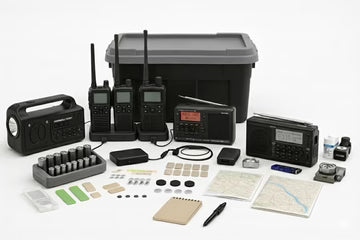
Communication & Awareness
Communication & Awareness
Information Keeps You Ahead. Noise Gets You Exposed.
Most people think communications means talking. In a disruption, receiving reliable information matters more than transmitting.
This system is built for quiet indoor awareness. Not hobby radio. Not broadcasting. Not playing operator.
The goal is simple: know what is happening early enough to make better decisions while keeping your household low-profile.
Listen first. Verify what matters. Stay informed. Stay disciplined.
The First Rule Of Communications
Information comes in. Your presence does not go out.
Communications matter when cellular service degrades, internet access fails, power is out for days, rumours spread faster than facts, and your household needs reliable information without becoming visible.
Core idea: listen first, transmit only when necessary, and keep household awareness private.
The more reliable your information is indoors, the less reactive your household becomes outside.
How This Communications System Works
This system is built around quiet listening, written plans, redundant receivers, protected power, and short household coordination.
Receive
Use emergency and weather radios to keep information coming in when phones and internet are unreliable.
Coordinate
Use short-range tools and a written household plan for check-ins, separation, and fallback instructions.
Conserve
Protect battery life with scheduled updates, low-power phone discipline, and a dedicated charging pouch.
Rule: information is useful. Noise is a signal.
Reliable Information Comes First
Communications are not about noise. They are about decision-making.
A good system helps answer: is the outage local or widespread, is weather getting worse, are roads open, are emergency services overloaded, are official instructions changing, and is it safer to stay inside or prepare to leave?
The household with better information usually makes better decisions sooner.
The goal is not to know everything. The goal is to know enough to avoid panic, rumours, and bad timing.
Primary Receiver And Backup Receiver
When phones become unreliable, a radio becomes one of the most dependable outside-world feeds you can keep in the home.
Primary: a daily-use weather or emergency radio.
Backup: a second unit stored separately or kept in your departure bag.
Power options: replaceable batteries first, USB recharge second.
If you only have one receiver, you do not have redundancy.
Example weather and emergency radio options:
Note: Example items are shown for illustration purposes only. Equivalent products may also be suitable. Some links may be affiliate links and may support the site at no extra cost to you.
 |
 |
 |
Listening Discipline
In disruptions, most mistakes come from rumours, panic, and half-information.
Your goal is to build a stable information routine so decisions stay calm and deliberate.
Check updates on a schedule, not constantly. Prioritize official alerts, weather updates, and verified local guidance. Keep volume low. Write down important updates instead of relying on memory.
Information discipline matters. You can stay informed without drawing attention to yourself.
Example listening, offline reference, and awareness support:
 |
 |
 |
The Preparedness Hub fits this system as an offline reference layer. It does not replace live alerts. It supports decision-making when internet access is degraded or gone.
Information Priorities
During a disruption, not all information is equally useful. Prioritize information that helps the household make practical decisions.
Weather: storms, cold, heat, flooding, wind, warnings.
Power: outage updates, restoration estimates, grid status if available.
Water: boil-water notices, service interruptions, contamination warnings.
Roads: closures, flooding, blockages, evacuation routes.
Emergency instructions: official alerts, evacuation notices, shelter-in-place guidance.
Do not waste power chasing every update. Focus on information that changes what your household should do next.
Phone Discipline And Power Reality
Phones are useful, but they are fragile during outages. They depend on towers, power, charging, signal, and network load.
Keep one phone reserved for updates and emergency contact. Turn on low-power mode early. Dim the screen. Close unnecessary apps. Avoid entertainment use unless power is stable. Send short messages instead of long calls when networks are weak.
Rule: one phone stays charged and protected. It is not the family entertainment device during a disruption.
Comms fail in a predictable order: phones drain, cell networks overload, internet disappears, people start guessing.
Your comms plan only works if the devices stay powered.
Primary approach: devices that run on replaceable batteries.
Secondary: USB recharging via power bank or power station.
Rule: keep a dedicated comms charging pouch so nothing is scattered.
No random charging. Define a daily charge window, then stop.
Household Coordination
This layer exists for simple coordination inside your household, not broadcasting.
Short-range radios can help with check-ins between floors or outbuildings, brief separation within your own property, and low-power coordination without draining phones.
These are practical tools for movement inside your own environment, not for turning your home into a radio post.
Example short-range two-way radio options:
 |
 |
 |
Rule: household coordination only. Short check-ins. No unnecessary chatter.
If you use any radio that requires licensing, training, or legal restrictions in your area, follow those rules. This page is about household preparedness, not unauthorized transmitting.
Household Communications Plan
Devices matter, but the plan matters more.
Every household should have a simple written communications plan that still works when phones are dead, internet is down, and people are stressed.
Include a printed contact list, radio channels or frequencies you actually use, set check-in times, one fallback meeting point, and one simple rule for what happens if phones fail.
If the plan only exists in someone’s head or phone, it is weaker than it looks.
Written Comms Card
Print a simple card and keep copies in the warm core, bug-out bag, vehicle, and care station.
Include household phone numbers, out-of-area emergency contact, local emergency numbers, pharmacy and doctor contacts, school or workplace contacts if relevant, radio channels, check-in times, fallback meeting place, and simple instructions if separated.
A paper plan still works when screens, passwords, chargers, and networks fail.
Passive Awareness
In some areas, a scanner can provide added context without transmitting anything.
This is an optional, more advanced layer. Keep it simple unless you already understand what you are monitoring and how you plan to use it.
If your household is not already comfortable with a scanner, a solid emergency radio is usually the better first move.
Best use: listen for situational awareness, not entertainment. If the information does not help your household make a better decision, it is probably noise.
Example passive awareness scanner options:
 |
 |
 |
Low-Visibility Communications Rules
Listening is usually enough. You do not need to transmit to stay informed.
Do not stand outside with radios, antennas, or loud chatter. Keep volume low. Store devices indoors. Use earbuds or headphones for quiet listening. Do not discuss what you hear loudly. Information discipline matters inside the home too.
Your home should not look or sound like a communications hub.
Information Routine And Update Log
Comms only help if they become part of a routine.
Check weather and official alerts at set times. Confirm major updates through more than one source when possible. Avoid doom-scrolling or constant scanning that burns power and attention.
Write down important updates so everyone in the household stays aligned.
Scheduled updates create calmer decisions than constant checking.
Update Log
Use a notebook to track date and time, source, what changed, and what the household should do next.
Writing it down prevents confusion. People remember things differently when they are tired, cold, hungry, or stressed.
Small Support Items And System Check
Communications systems often fail for simple reasons, not dramatic ones.
Keep spare AA or AAA batteries, a battery organizer or pouch, wired earbuds or headphones, a charging cable kit, and a waterproof notebook and pencil with the system.
Example communications support items:
 |
 |
 |
System Check
Turn on both radios. Confirm batteries are fresh or charged. Check the printed contact list. Review the household radio channel or check-in plan. Test earbuds or headphones. Confirm the Preparedness Hub or offline reference layer still powers on if used.
Do not wait for an outage to find out the radio is dead, the cable is missing, or nobody remembers the household plan.
Quick Summary
- Information keeps you ahead. Noise gets you exposed.
- Use a primary emergency or weather radio
- Keep a backup receiver stored separately
- Use replaceable batteries first and USB recharge second
- Keep one charged phone reserved for updates and emergency contact
- Use short-range radios only for simple household coordination
- Print contacts, channels, check-in times, and fallback locations
- Use a written comms card
- Add a passive scanner layer only if it makes sense for your household
- Check updates on schedule, not constantly
- Write down major updates and what they mean
- Keep communications quiet and low-profile
- Test the system before it is needed
The household with better information usually makes better decisions sooner.
Communications and awareness help you stay calm, stay ahead, and stay inside.