The Gray-Man Home
The Gray-Man Home
Gray-Man Is Not About Fighting. It Is About Not Being Chosen.
Most people prepare for food, water, heat, and power. Fewer people think about what happens when other people run out.
During a prolonged disruption, your supplies matter. But what people can see, hear, smell, and learn about your home matters too.
A prepared home should not advertise that it is better supplied than the homes around it. It should look ordinary, closed, controlled, and not like the easiest option on the street.
The goal is not to scare people away. The goal is to avoid becoming the house people choose to test.
Quiet advantage. Clear boundaries. No reason to engage.
The Uncomfortable Truth
When normal systems fail, prepared families try to stay home. The unprepared are forced out looking for what they need.
Empty shelves create pressure. Cold homes create pressure. Fuel shortages create pressure. Uncertainty creates pressure. People start looking for options.
Most people are not looking for a fight. They are looking for the easiest answer: food, water, warmth, fuel, information, a charged phone, or someone who seems better off than they are.
They notice which homes have lights. Which homes smell like food. Which homes have movement. Which homes sound active. Which homes seem warmer, powered, stocked, or unusually comfortable.
If your home looks like the one with answers, it can become the one people approach.
The goal is simple: stay functional, keep the door closed, and avoid looking like the easiest option on the street.
What Gray-Man Really Means
A Gray-Man Home is a normal-looking home that can keep functioning during disruption without advertising its resources.
It is not about looking aggressive. It is not about looking abandoned. It is not about trying to scare people away.
It is concealed capability and clear boundaries.
Prepared inside. Controlled outside.
From the street, your home should communicate one thing:
This home is closed, occupied, controlled, and not worth testing.
How Homes Attract Attention
Early in a disruption, most people expect normal life to return. As conditions worsen, supplies thin out, fuel disappears, stores empty, and people start looking for options.
Homes that appear powered, stocked, active, warm, or unusually comfortable attract attention.
Gray-Man is about reducing those signals before attention shifts.
Avoid visible advantage signals
- bright interior light at night
- loud generators
- visible stockpiles
- obvious fuel staging
- open garage doors
- visible supply movement
- strong cooking smells
- unusual activity when other homes are dark and quiet
If people can tell your home is functioning better than theirs, you have already given away too much.
The Core Gray-Man Rules
Conceal
Do not show what gives you advantage. No bright interior light at night. No visible power sources. No obvious stored supplies. No comfort signals when others are struggling.
Deny
Do not become part of someone else’s plan. Do not casually open the door. Do not explain what you have. Do not discuss supplies. Do not turn uncertainty into interaction.
Delay
Use simple measures that buy time and reduce easy access: blackout layers, glass film, better strike plates, longer screws, interior barriers if conditions worsen, and simple battery alarms on priority doors and windows.
Disengage
Keep the home harder to read and harder to pressure. No visible routines. No drawn-out doorway conversations. No supply handling in view. No signals that your home is a source.
Keep The Door Closed
Opening the door exposes information immediately: light, supplies, numbers, layout, warmth, smell, activity, and routine.
Once conditions deteriorate, unnecessary interaction becomes risk.
If someone believes your home has answers, they may come back. They may tell someone else. They may decide your home is worth another try.
Speak through the door only if needed. Keep it short. Keep it calm. Keep it closed.
- do not open the door to explain
- do not open the door to negotiate
- do not mention supplies
- do not reveal who is inside
- do not let politeness turn into exposure
Once people know you have supplies, word spreads fast.
Exterior Discipline
Most attention starts with obvious clues. Keep the outside unchanged, forgettable, and boring.
- no open garage door during disruption
- no visible supply stacking near doors or windows
- no loading or unloading in plain view
- no front-yard projects, tools, ladders, or loud work
- keep the entry area tidy, ordinary, and closed
The less people notice, the less they think about your home at all.
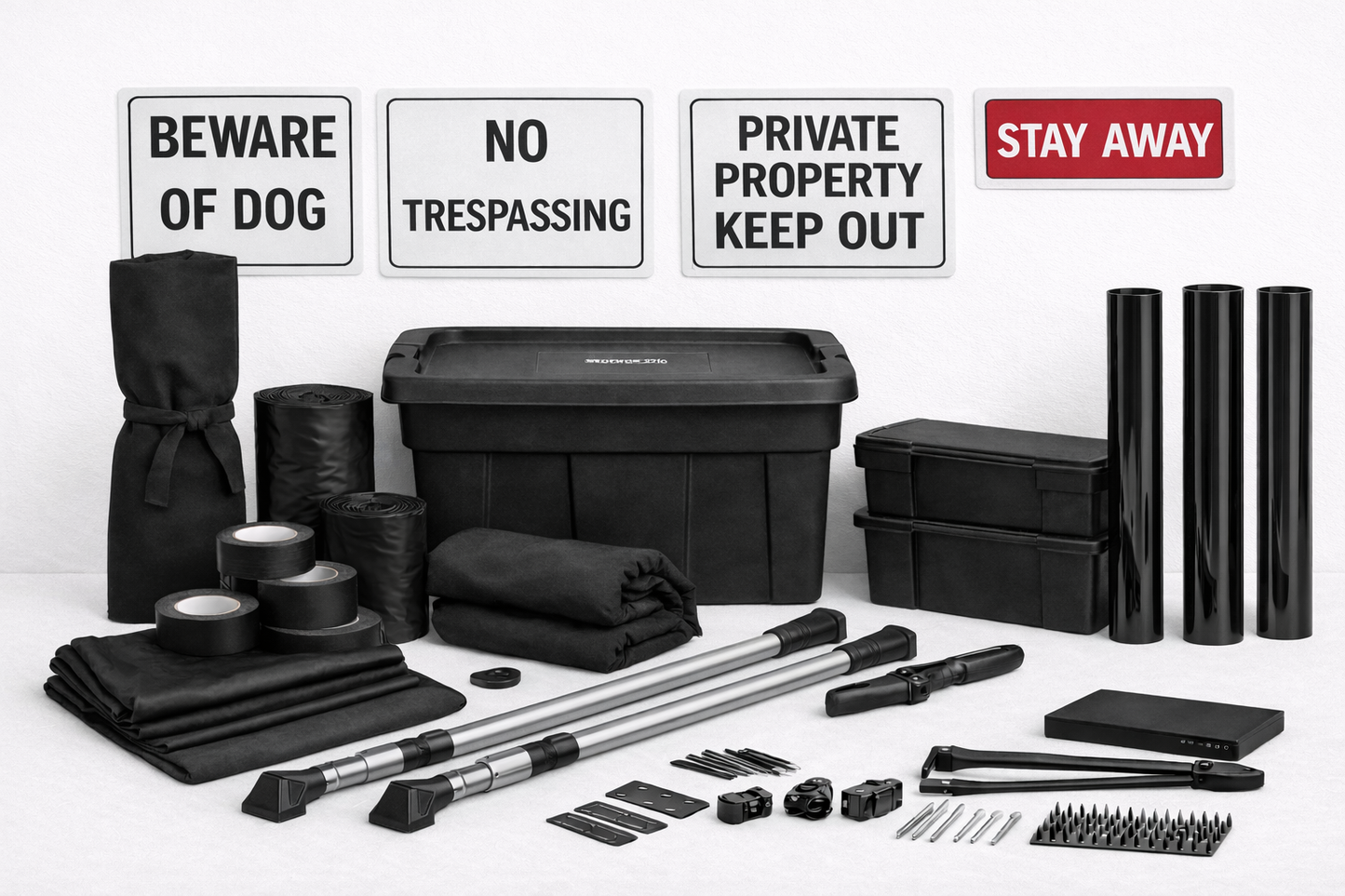
People under pressure usually look for the easiest option. Clear, calm boundaries reduce testing.
Use short, unemotional language:
- Private Property
- No Trespassing
- No Entry
Not threatening. Not emotional. Clear.
Example boundary and signage options:
Note: Items shown are examples only, not specific recommendations. Some links may be affiliate links and may support the site at no extra cost to you.
 |
 |
 |
Control Light, Gaps, And Visibility
Light spill is one of the fastest ways to advertise that your home is active, powered, warm, and functioning.
The objective is simple: no visible glow from outside after dark.
Light must not leak through windows, blind edges, curtain gaps, door seams, sidelights, or door glass.
Black Out Windows Properly
- apply clear security film directly to the glass if using it
- use a separate opaque blackout layer on the inside
- cover fully from edge to edge
- seal gaps around the perimeter
- cover sidelights and door glass
- test from outside at night, not during the day
If people can see light, movement, or activity from outside, blackout failed.
Example blackout, film, and visibility-control supplies:
 |
 |
 |
Interior Light Discipline
- use low-lumen settings after dark
- aim task lights downward
- keep one dim path light for safe movement
- do not stand between light sources and windows
Gap Control And Early Warning
- seal light leaks under and around doors
- secure blackout material so it stays put
- use simple battery alarms on key entry points
This is not high-tech. It is quiet, cheap, and practical.
Example gap-control and simple entry-notice supplies:
 |
 |
 |
Glass And Entry Delay
The goal is not to make entry impossible.
The goal is delay, noise, and time.
Impact or fragment film can help hold shattered glass together, reduce immediate blow-through, force repeated strikes, and buy time.
Installed properly, it changes nothing visually from outside.
Normal house. Harder target.
Prioritize
- ground-floor, street-facing windows
- windows near doors and easy-reach points
- basement windows, which are often forgotten
- strike plates and hinge screws upgraded into framing
- an interior door bar for the room you sleep in
Most door failures happen at the frame, not the lock. Reinforcement should be internal and invisible.
Example glass film and entry-delay supplies:
 |
 |
 |
Example door and frame reinforcement:
 |
 |
 |
Keep Simple Materials Inside
Keeping a small reserve of basic materials inside the home gives you options without advertising preparation in advance.
- a few sheets of plywood, cut roughly to window size if possible
- several 2×4s
- structural screws, not drywall screws
- a drill with a spare battery
These are not for show. They are options if movement increases, property testing begins, glass damage appears nearby, or official guidance recommends securing openings.
Quiet Living And Information Discipline
During prolonged disruption, light, odour, noise, trash, vehicle movement, and routines all become signals.
Reduce Household Signals
- dropped-object noise
- heavy footsteps
- slamming doors
- loud cooking cycles
- strong cooking smells venting outside
- obvious surplus trash
- visible loading or unloading
Cooking Discipline
- boil once
- batch hot drinks
- avoid long simmer cycles
- avoid strong odours when possible
Trash Discipline
- do not create obvious surplus trash output
- break down packaging quietly
- store packaging out of sight
- dispose of waste as normally as possible when conditions allow
Vehicle And Driveway Discipline
- limit idling
- avoid frequent trips
- avoid predictable supply runs
- do not load or unload visible supplies in daylight
- keep the driveway looking normal, not like a staging area
Do Not Talk About What You Have
The moment people know you have extra food, water, fuel, backup power, or supplies, you stop being just another house.
You become a resource.
- do not tell neighbours what you stored
- do not mention how long you can last
- do not show supplies to anyone who does not need to know
- do not post your setup online during a disruption
- do not assume “just one person” will keep it private
Information discipline is security.
Quick-Start Checklist
- blackout layer installed and tested from outside
- glass film on priority windows
- reinforced strike plates and long screws installed
- door bar ready for the sleeping room
- clear signage stored and ready
- door stays closed once conditions deteriorate
- gap control in place at priority doors and windows
- simple battery alarms on key entry points
- warm core aligned with visibility control
- no exterior light leaks
- no visible fuel or supply handling
- trash discipline plan in place
- vehicle and driveway discipline defined
- information discipline in place
- keys, shoes, and one light kept in one place
The Purpose Of The Gray-Man Home
Stay inside. Stay functional. Stay controlled. Stay closed. Shift only when necessary.
Preparedness works best when nothing needs to be displayed, explained, or offered.
Most people do not want to think honestly about prolonged disruption: empty shelves, cold homes, fuel shortages, no deliveries, no easy answers, and people moving through neighbourhoods looking for options.
They also do not want to think about what homes communicate from the street.
Light communicates. Noise communicates. Smell communicates. Movement communicates. Trash communicates. Open doors communicate. Visible supplies communicate.
That is exactly why Gray-Man matters.
You do not need to look strong. You do not need to look ready. You do not need to prove anything.
Hide advantage. Set clear boundaries. Keep the door closed. Avoid looking like the easiest option on the street.
Gray-Man is not about fighting. It is about not being chosen.